What is the Best Meat For Dog Food?
Ask ten dog owners which meat is best for their dog and you'll get ten different...

What is the Best Meat For Dog Food? | Eureka Pet Co - Eureka Pet Co
Skip to content Made in Australia
Ask ten dog owners which meat is best for their dog and you'll get ten different...
Ask ten dog owners which meat is best for their dog and you'll get ten different answers. The truth is, there's no single winner. The best meat for dog food depends on your dog's individual needs, tolerance and the quality of what's actually in the bowl. Whether you're switching proteins or exploring air-dried dog food for the first time, this guide breaks down the most common protein options and what actually separates a quality meat from one that just sounds good on a label.
Before comparing proteins side by side, it helps to understand what you're actually evaluating. The protein name is just the start. What actually matters:
A protein that ticks these boxes will almost always outperform a “better” sounding meat used in small quantities or processed in a way that strips away nutrients.
Here's how the most common dog food proteins stack up:
| Protein | Key strengths | Things to consider |
|---|---|---|
Chicken | Lean, highly digestible, good for active dogs | Common allergen; quality varies significantly by source |
Beef | Rich in iron and zinc, highly palatable | Higher in fat; some sensitive dogs may react |
Kangaroo | Lean, nutrient-dense, suits dogs with chicken or beef sensitivities | Less familiar but widely available in quality dog food ranges |
Venison | Lean, novel protein, low allergenic potential, Australian-sourced | Novel protein that tends to be easier on dogs with intolerances |
Fish | High in omega-3s, supports skin and coat, easily digestible | Sourcing matters; look for a named species |
Lamb | Palatable, suits many sensitive dogs | Richer than chicken; watch fat content |
Boar | Rare novel protein, lean, ideal for dogs with multiple intolerances | Hard to find outside of specialty natural pet food ranges |
Not all versions of the same meat are equal.
The table above compares proteins in their best form. What ends up in most dog food bags is a different story.
"Chicken" in a cheap dry food is not the same as free-range chicken muscle, organ and bone. "Kangaroo" on a label tells you almost nothing about whether it was wild-caught or where it came from.
What actually distinguishes quality sourcing:
Wild-caught or free-range animals produce leaner meat with better fatty acid profiles and lower allergenic potential than farmed equivalents.
Grass-fed lamb has a different fat profile, nutrient density and flavour to grain-fed.
Lamb tripe adds natural digestive enzymes a lean muscle cut alone will not provide.
Whole animal nutrition, meaning muscle meat alongside organ meat and bone, gives a more complete amino acid profile without relying on synthetic supplementation.
Inclusion rate matters. A recipe where meat accounts for 90% of the formula is doing something meaningfully different from one where fillers make up the bulk.
The difference between a protein that does the job and one that does it well comes down to sourcing, inclusion rate and what surrounds it in the recipe. That's where most dog foods cut corners.
Once you've identified the protein, the next question is how it was sourced and what happened to it before it reached the bowl.
Whether the meat is the primary ingredient, not a minor addition propped up by grain or starch, matters as much as which protein it is. So does whether the recipe includes organ meat and bone, where the animals were raised, and whether it relies on fillers like corn or soy.
Processing plays a role too. High-heat formats can degrade protein quality and require synthetic additives to compensate. Minimal processing, like air-drying at low temperatures, preserves more of the meat's natural nutritional value without sacrificing safety.
See our guide to top ingredients to avoid in dog food, and why novel proteins are the key to dog nutrition for more details on both.
Ingredient lists can feel overwhelming. A few simple rules help:
Once you know what to look for, the choice comes down to your dog's preferences and history.
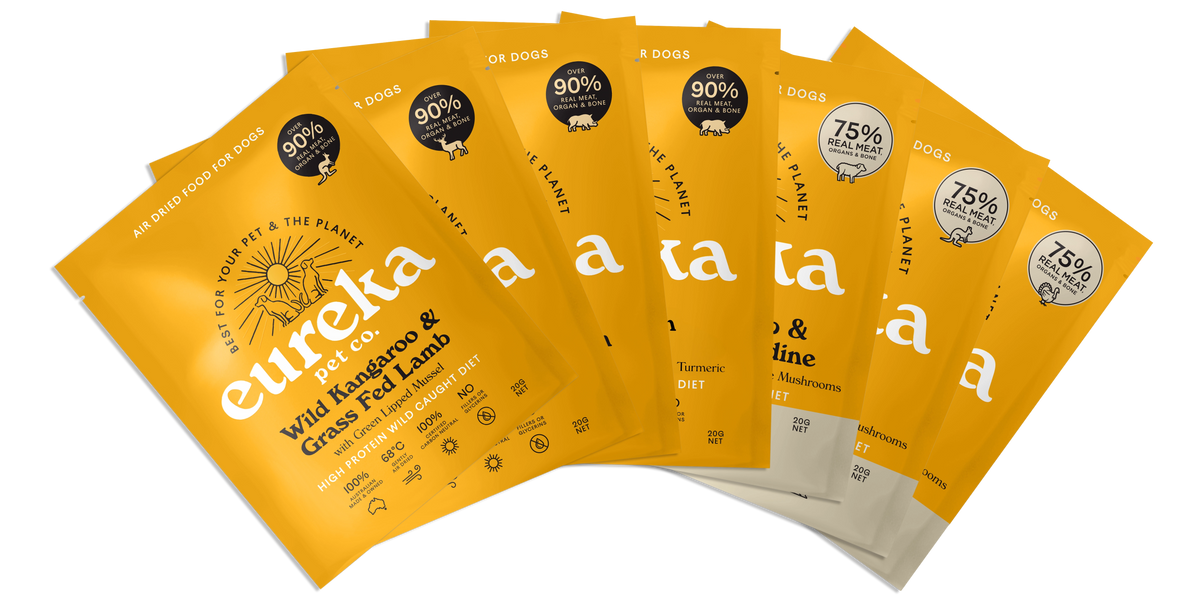
If your dog thrives on chicken, there's no reason to switch. If you've seen signs of protein sensitivity, or you want to reduce the risk of intolerances developing, a novel protein is a smart move. Eureka's three core recipes (Wild Kangaroo & Grass Fed Lamb, Wild Venison & Grass Fed Lamb, and Wild Boar & Free Range Chicken) use named wild proteins, contain no fillers, and are 100% Australian-made. You always know exactly what you're feeding.
Not sure where to start? Use the Eureka feeding calculator to find the right fit for your dog.

Is chicken or beef better for dogs?
Neither is universally better. Chicken is leaner and slightly more digestible for most dogs, while beef offers more iron and zinc. The more important question is the quality of the meat and whether your dog has a history of reacting to either protein.
Is kangaroo meat good for dogs?
Yes. Kangaroo is a lean, novel protein with low allergenic potential, making it a strong choice for dogs with sensitivities. It's wild-caught and sustainably sourced in Australia, which adds to its appeal from both a quality and environmental standpoint.
Does the type of dog food matter as much as the meat?
Yes. Even high-quality meat can be compromised by processing. Formats that use intense heat can degrade protein quality and require synthetic additives to compensate. Minimally processed formats like air-dried retain more of the meat's natural nutritional value.
Is it better to feed my dog multiple proteins?
Rotating proteins can be beneficial. It provides a broader range of amino acids and reduces the chance of developing food sensitivities over time. Transition gradually to avoid digestive upset. Eureka's guide to transitioning your dog has practical tips for making the switch smoothly.

Dog Ownership
Summer's coming, and if you're anything like us, that means working out one thing above all else: finding good beaches for dogs that actually tick...
Feeding Advice
Raw feeding does right by dogs, but it asks a lot of you: a chest freezer, strict prep, a defrosting schedule. Kibble is easier, but...

Feeding Advice
Chewing isn't a bad habit, it's a biological need. Leave a dog without an appropriate outlet and they'll find one themselves, and it's rarely the...
Grab a Taste Tester pack and get a $20 credit towards your first subscription order. All seven air-dried recipes, free delivery, just $19.99. Let your dog do the judging. Their opinion's the only one that counts.